This is the Jaisalmer–Barmer set from 2018, and it holds together as two things: the vernacular fabric of the villages and the fieldwork happening inside it.
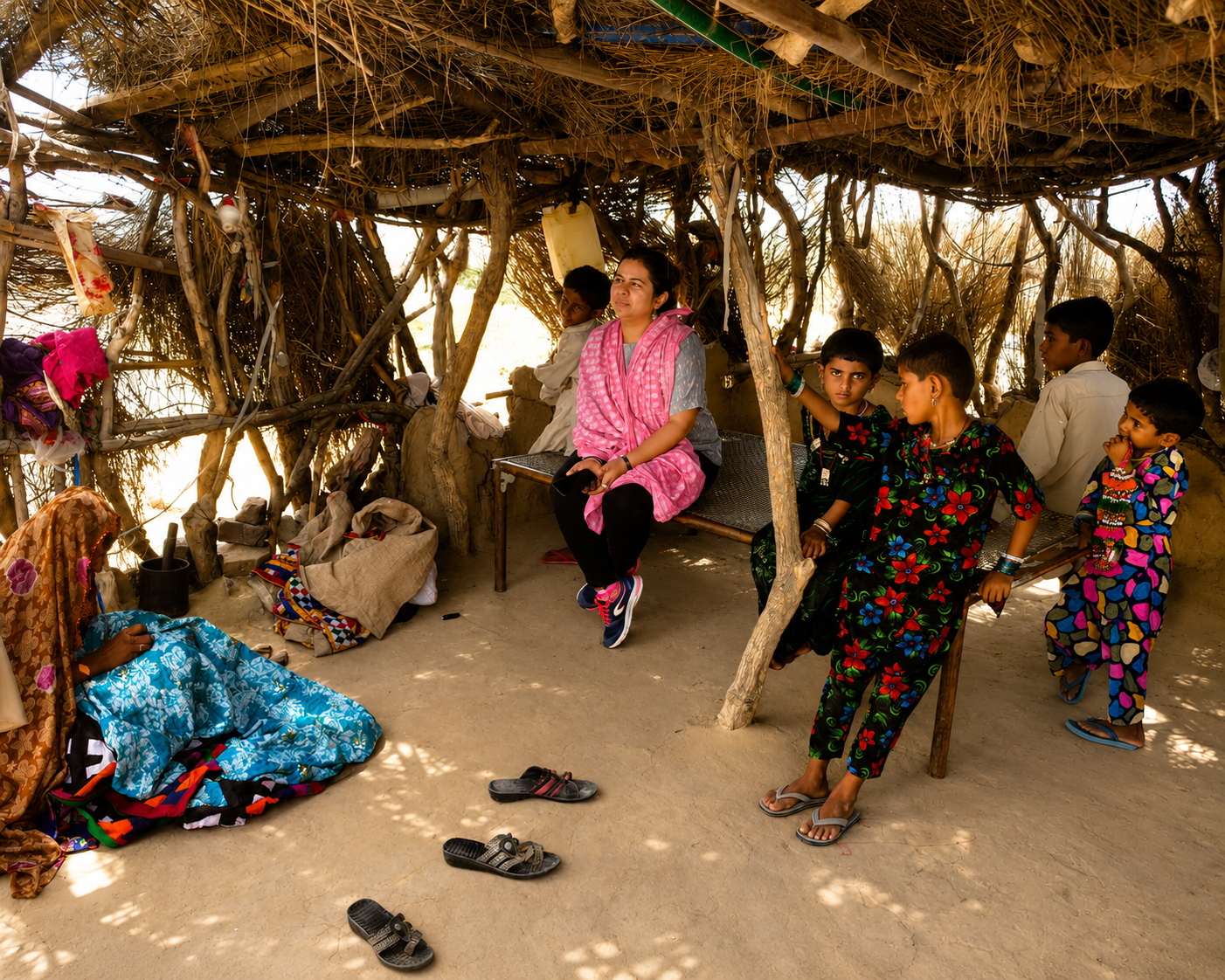
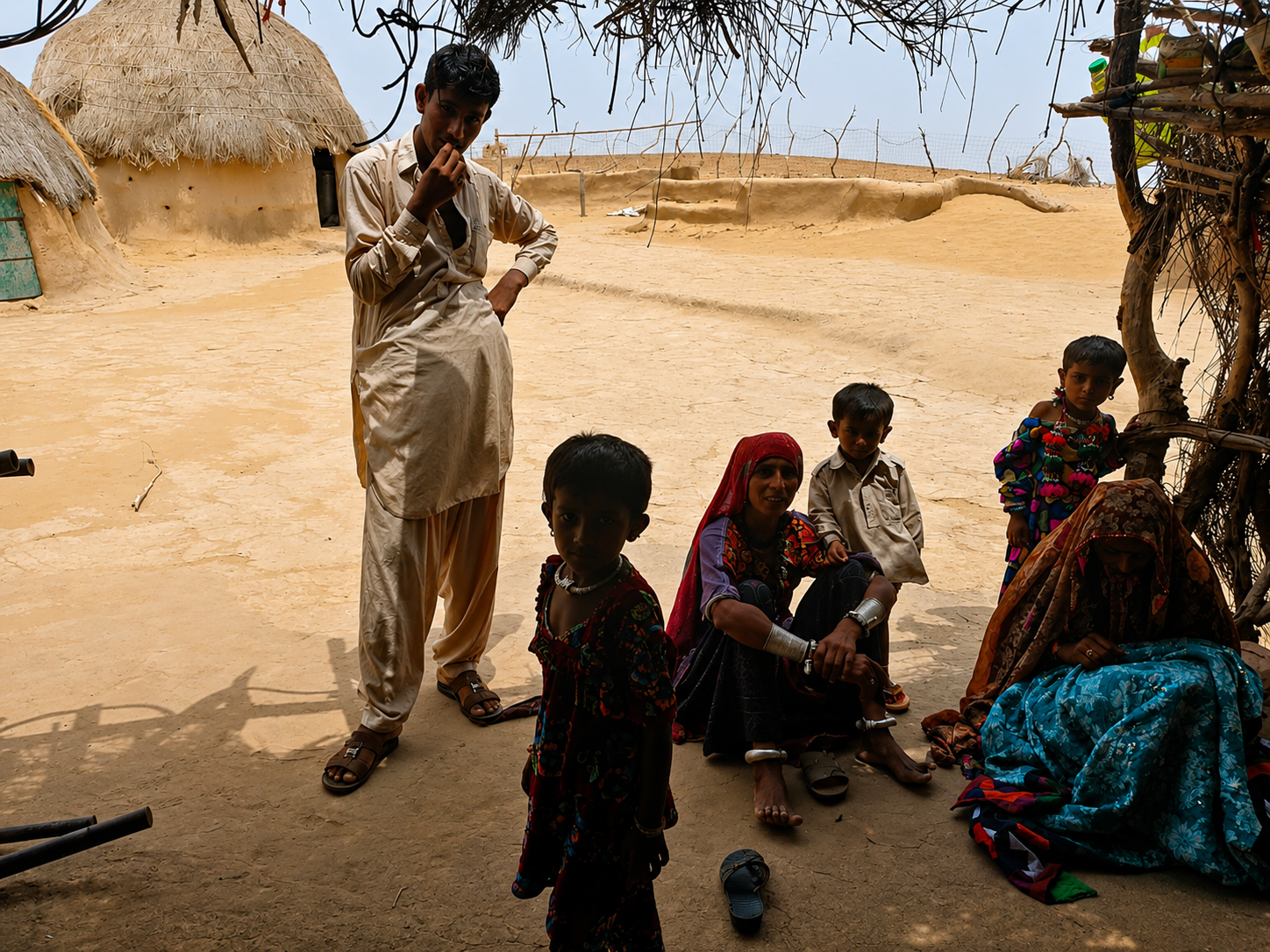
The huts come first. Mud walls, low and rounded; thatch roofs pitched against the heat. Nothing here follows a drawing; it works because generations have kept adjusting it until it did. Children in mirror-worked, floral prints move through the family compound, goats and open ground filling the space between structures. Inside one shelter, a researcher sits on a rope cot while the children crowd in, more curious than shy.
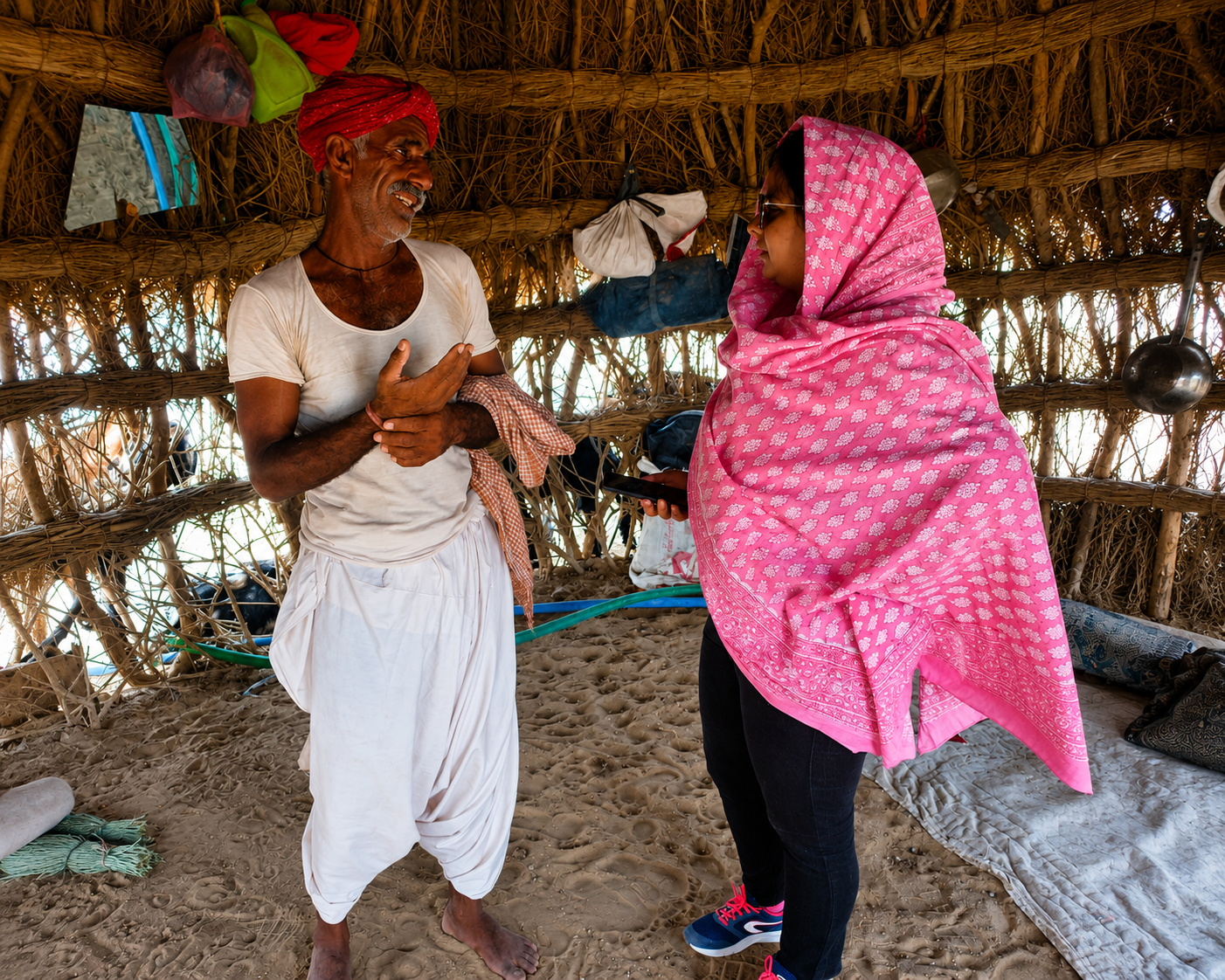
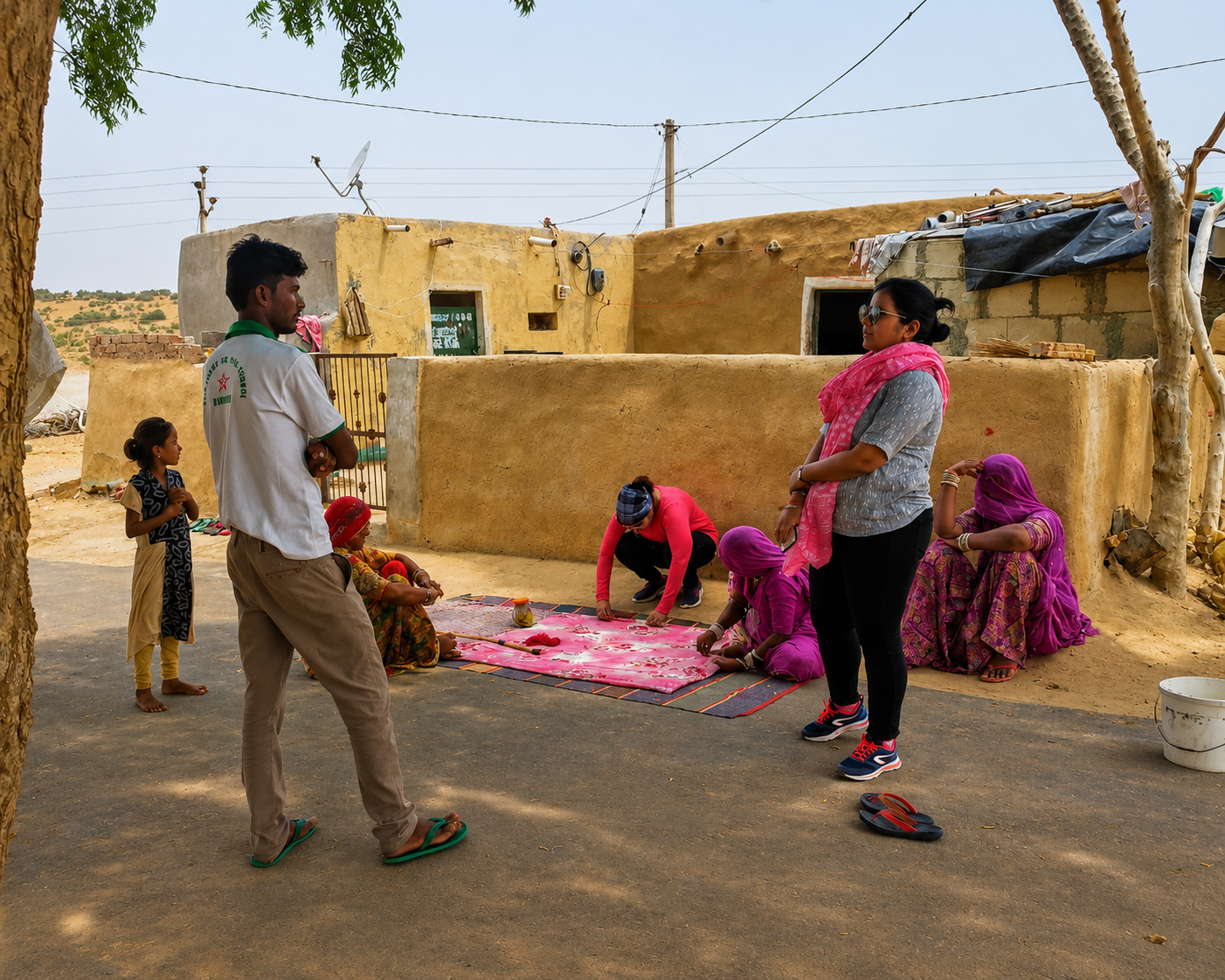
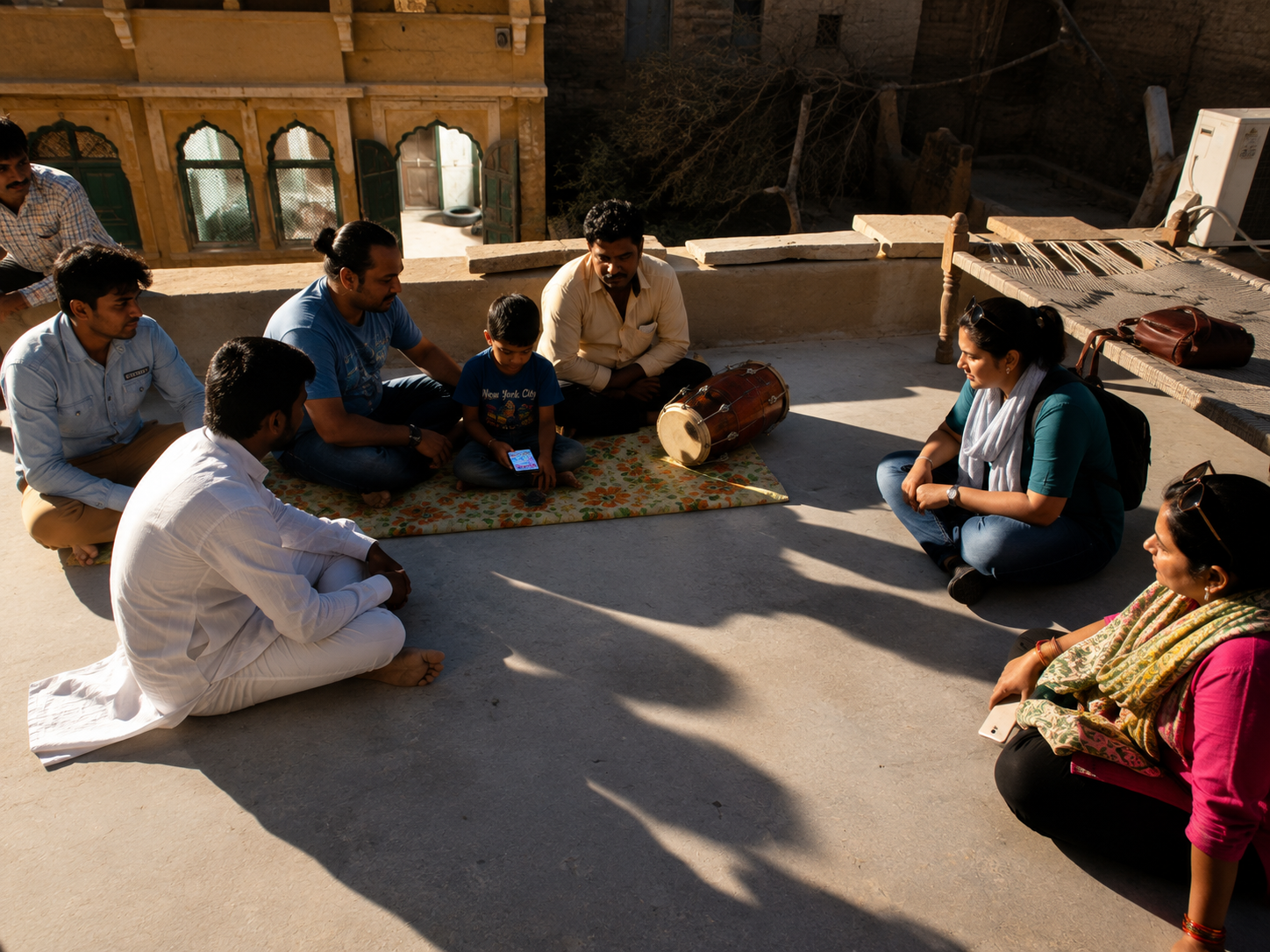
The same fieldwork rhythm repeats through the day. A man in a red turban, arms crossed, talking mid-sentence. Women seated on a pink cloth spread over the ground, hands busy with something, a small audience gathering. A rooftop conversation under carved jharokhas, a dholak set to one side, someone holding a phone screen up for the group: the kind of unhurried exchange oral history actually runs on.
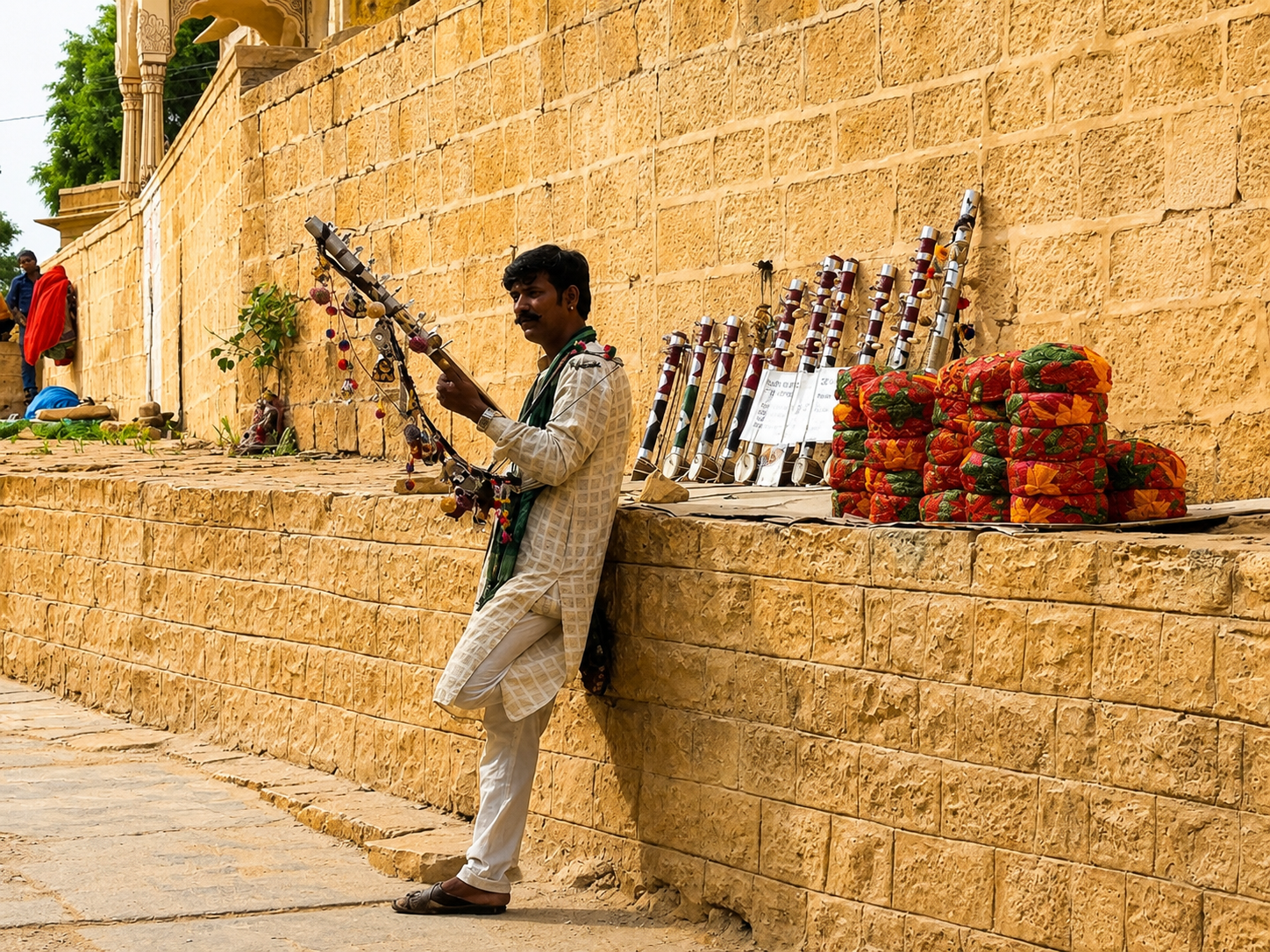
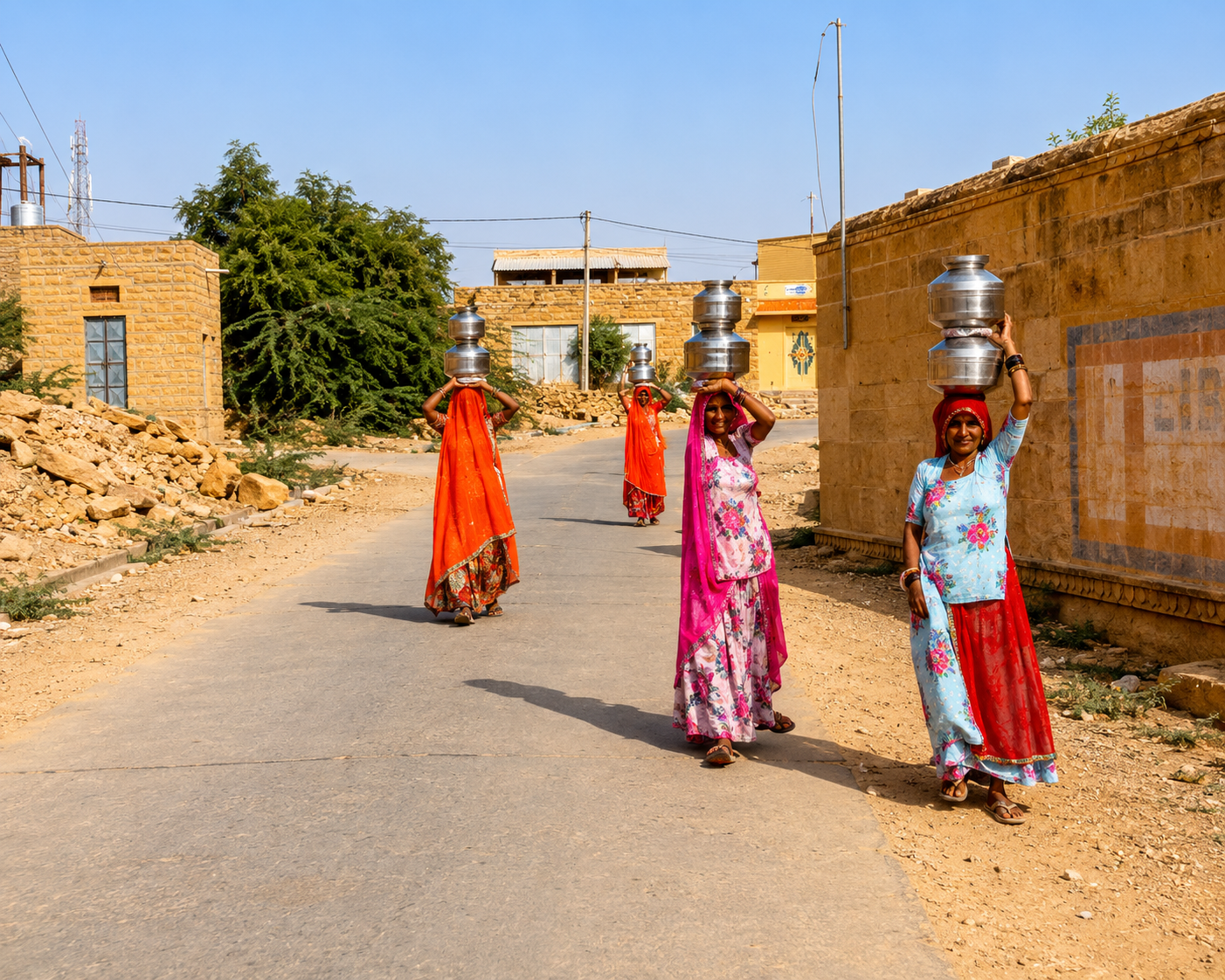
Then Jaisalmer proper: sandstone fort walls, the chhatris at what looks like Bada Bagh, and a ravanhatta player leaning against a wall with garlands stacked for sale. And on a village road, four women walking with brass pots on their heads, water still fetched the way it always has been here.